Services
Documentary
Short and long-form documentary about disability, the coast, and the people who live and work along it, made from a perspective most crews don't have.
In short
- I make documentaries, from short films to longer pieces.
- My own projects are in development, and I take commissions.
- The stories are about disability, coastal life and work.
What I make
Short documentary
Five to twenty minutes, for festivals, online, or an organisation with a story worth telling properly.
Long-form & series
Development, pitching and production of longer projects, alone or with a co-producer.
Commissioned documentary
A documentary approach for charities, museums and organisations, rather than a promo.
Oral history
Recording people's memories of a place, a trade or a way of life before they're lost.
A different eye-line
My wheelchair puts the camera at a height most filmmakers never use, and gives me a lived understanding of the stories I tell. People talk differently to someone who isn't standing over them.
Built on trust
Documentary only works if contributors trust you. I take duty of care seriously: clear consent, contributors seeing their scenes before release, and support before and after filming. I'm NSPCC-trained in protecting children in entertainment.
In development
I'm developing original projects about coastal life and disability in the South West. If you're a commissioner, funder or co-producer looking for that perspective, I'd like to talk.
I've trained in the assistant director department on high-end TV through ScreenSkills, including Beyond Paradise and Horrible Science, and worked on a SailGP documentary shoot, so I know how a bigger production runs as well as a small one.
From the work
Related films
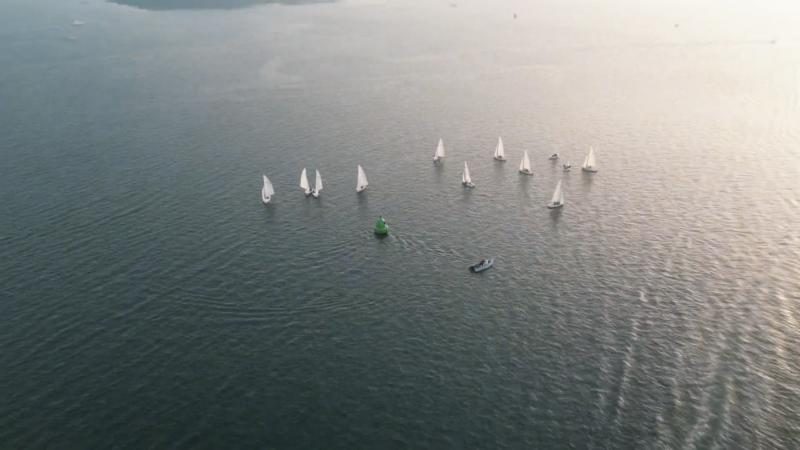
What's in this film: Plymouth
Aerial footage of Plymouth's waterfront in soft evening light. It includes Smeaton's Tower, the red and white lighthouse on the Hoe; a fleet of sailing dinghies racing on the Sound; and Tinside Lido seen from directly above, its pale blue pool curving against the dark sea.
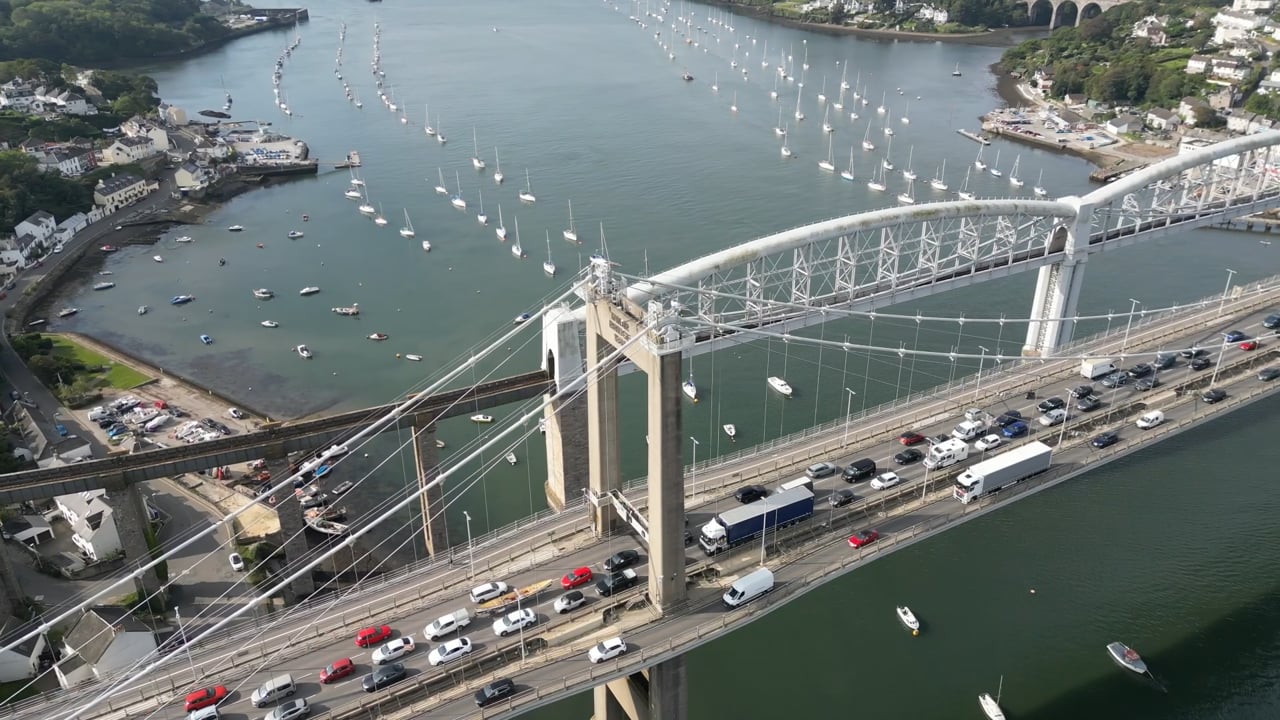
What's in this film: Tamar Bridge
Aerial shot over the Tamar Bridge as traffic crosses between Devon and Cornwall, with dozens of boats moored on the river below and the waterside town along the bank.
How it works
Step 1: Talk
We start with a conversation in whatever way suits you: email, phone, or a video call with captions on. No pressure and no jargon.
Step 2: Plan
A short questionnaire, a clear plan and a schedule. I ask about everyone's access needs up front, on both sides of the camera.
Step 3: Film
A small crew and a calm set. Days are planned around the people in the film, not the other way round.
Step 4: Edit
You see the cut, tell me what's working and what isn't, and we refine it together.
Step 5: Deliver
Every format you need, with the accessible versions included as standard rather than added on.
Included with every film
Accessible as standard
Captions
Accurate, human-checked captions on every version — as a separate file and burnt in for social media.
Transcript
A full text transcript, including descriptions of important sounds and what's on screen.
Audio description
A described version for blind and partially sighted viewers, available on request.
BSL
British Sign Language interpretation can be arranged and built into the budget.
Questions
Do you take commissions?
Yes, from broadcasters, funders and organisations. I'm also open to co-productions.
Can you work as part of a bigger team?
Yes. I can lead a small production or slot into a larger one, and I've worked in the AD department on high-end TV.
How do you look after contributors?
Plain-language consent, preview before release, access needs met, and a named person to talk to throughout. Some people need more support than others, and that's planned for.
Have a story, or a commission?
Whether you're a contributor with something to say or a commissioner looking for a fresh perspective, get in touch.